
Five simple steps to successful parenting: evidence-based advice from an expert.
Raising a child is like an art that requires patience, love and understanding. This represents one of the most difficult challenges in the world, and successful parenting techniques are not always uniform. We all strive to ensure that our children grow up happy and successful. However, it is often difficult for parents to determine how to prepare their child for the future life.
But Carlota Nelson, director of the documentary Brain Matters, offers five simple, effective, research-based tips that can help boost your child’s brain development. Let’s take a closer look at these methods.
-
Develop your brain with games
Carlota Nelson emphasizes the importance of play in stimulating brain development in children. Play is not only joy, but also an opportunity for a child to explore the world, develop coordination and learn to solve problems. A variety of games promote creativity, logical thinking and social skills. Make time for active games that support mental development.

Little children learn all the time. Through play, they learn vital life skills. Playing different characters allows them to imagine themselves as someone else and learn to understand the feelings of others. When they play with other people, they learn to compromise and perform an action while taking turns. Engaging in imaginary free play, such as imagining that a toy train can travel through outer space, awakens children’s creativity and language skills. During these games, young children learn to express their ideas and thoughts verbally. When young children imagine new imaginary worlds, they learn to solve problems and find new possibilities. What seems like simple fun is actually meaningful action. Take the game seriously, because the game is an important learning process. Try to use any device in front of your child as little as possible. Research shows that this makes children think they are being neglected.
-
Use everyday activities as teaching moments
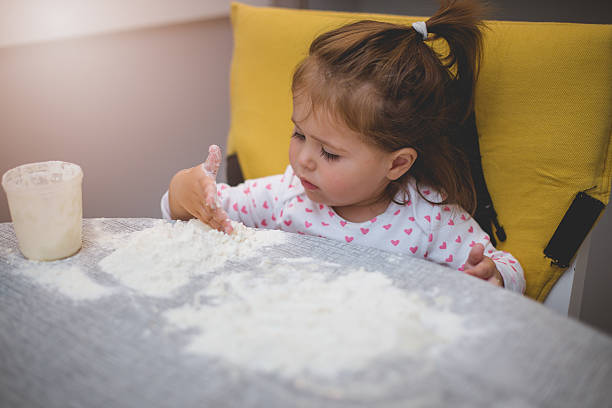
Ordinary moments in life can become lessons for a child. For example, cooking is a great opportunity to teach your child how to count, measure, and discuss the nutritional value of foods. Involving children in everyday activities not only develops their skills, but also creates responsibility and independence.
For young children, any of the daily actions on the part of adults is learning. Whether it’s bathing, sorting laundry, cooking, or running errands, all of these activities are excellent learning opportunities. While performing certain actions, say out loud what you are doing in order to activate the child’s speech activity. Count and sort laundry to teach math, play with food ingredients, and learn aloud the structure and texture of objects to develop scientific thinking. Grimacing to show different emotions is a great way to develop children’s understanding of emotions.
-
Create a supportive environment, structure and predictability
Children adapt better when they have structure and predictability in their daily lives. Carlota Nelson advises creating consistent routines, such as bedtimes and waketimes, to help your child’s brain better navigate the world around it.

It is important to create a home environment that is conducive to the child’s development. Reading books, discussing important topics, pursuing creative hobbies – all this contributes to mental growth. Open dialogue and understanding with your children will help them feel safe and supported.
Physical activity plays a key role in brain development. We also recommend including various types of physical activity in your child’s daily life, such as swimming, walking, and playing in the fresh air. This not only develops motor skills, but also promotes overall physical health.
-
Develop emotional intellectual communication
Little children are brilliant parodists. They visually pick up everything you do. Before they start talking, they become experts at reading facial expressions and identifying relationships that aren’t expressed in words, and learning to parody them. By observing your gestures, the way you treat others, or how you react to different situations and problems, young children remember this and, over time, can begin to use similar attitudes, reactions and actions in their lives. Your behavior and attitude will shape your child’s personality.

Carlota Nelson emphasizes the importance of emotional communication with your child. According to her, it is important not only to teach facts and figures, but also to develop emotional intelligence. Maintain an open dialogue with your child, express your feelings and teach him to understand the emotions of others.
Teach your child to manage their emotions and build positive relationships with others. Emotional intelligence plays an important role in creating successful individuals. Discussing feelings, encouraging the expression of emotions, and teaching conflict resolution will help your child interact successfully with the world around him.
-
Stimulate the desire to learn
Support and encourage your baby’s babbling and treat it like real conversation. The sounds babies make and their gestures don’t always seem that important, but it is their only form of communication. Early childhood development experts say we should support and encourage baby talk and treat it as real conversation. Parents should respond to and interact with their child’s sounds, signals, and actions throughout the day. The words that a child hears from an adult before he reaches the age of two, and mainly the number of them, will determine the size of his vocabulary at this age, and will later influence the development of his reading skills. Take baby talk seriously and encourage it.
According to Carlota Nelson, it is important to cultivate a child’s interest in learning. Encourage his questions, support his curiosity, create conditions for new discoveries. The active development of curiosity will help to form a sustainable interest in learning in the child. Remember that curious children are future explorers and leaders.
Young children may not yet have learned to speak or read, but they are, in fact, ready to learn from birth. Already at three months of age, they can distinguish every sound used in the world’s languages. Every time you read aloud to your child, you are developing his speech and language skills. As you read, show the pictures in the book and ask questions about the story and its characters. Simple questions like “what are they wearing?” and “how many are there?” will help develop your child’s speech and language skills. Reading to young children will not only help them learn new words and remember them, but will also instill in them a love of reading books. Remember, leaders become those who have read and read a lot in their time, so why not start this process as early as possible?
The development of a child’s brain is a process that requires attention, care and effective techniques. Carlota Nelson’s tips provide parents with simple, science-backed tools to support children’s intelligence development. It is important to remember that every child is unique and supporting their individual needs is key to creating a successful path to the future.
Raising children is a unique journey, and every parent finds their own approach. Remember that love, attention and joyful learning can be the keys to a happy and fulfilling future for your little one.
Providing your child with the best tools for a future successful life has nothing to do with financial or expensive educational resources. It has to do with you, your time, and your level of involvement and interaction with your child.
Carlota Nelson is the director of Brain Matters, an innovative feature-length documentary about early brain development in young children. Before filming began, Carlota spent eight months researching early childhood development with the world’s leading neuroscientists and members of the early childhood development community.


Hello, I’m Dorothy. I love writing and researching articles. Reading books about baby health, care and pregnancy are my favorite. I will be sharing delicious and healthy information on food and baby food during pregnancy.