
Personality formation through creativity. 10 tips for developing your child’s creativity.
How different types of creative activities shape a child’s personality and brain.
The creative abilities that everyone has, just developed to varying degrees, include fantasy, imaginative thinking and imagination, curiosity, intuition and perception.
According to psychologists, by paying attention to the creative development of the child, parents make a valuable contribution to his future. And that’s why. Creative activity is good for the psyche. You’ve probably heard about the benefits of art therapy, which helps relieve stress, reduce aggression and distract from negative emotions.
Creativity plays a key role in children’s development, providing them not only with the opportunity to express themselves, but also influencing various aspects of their intellectual, emotional and social development. In this article, we’ll look at how different types of creativity can shape unique personality traits and support children’s brain development.
Creativity helps in learning. By being creative, children learn to find effective solutions to complex problems, revealing their creative potential, switching gears and unloading the brain, and also developing empathy. All these skills will be useful in school.
Children express themselves through creativity. Through dance, painting or music, a child tells his story to the world. Thanks to the development of creative abilities, his creativity is revealed and the skills to think outside the box are acquired.
It is important to start developing creative abilities from early childhood. They are no less important than intelligence, memory and logic. Creative and logical thinking complement each other, forming a harmoniously developed personality.
Painting and drawing contribute to the development of motor skills and coordination in children. From a very young age, children can be given crayons, pencils, and paints. By the age of three, drawing acquires meaningful features, and the child strives to draw what surrounds him.
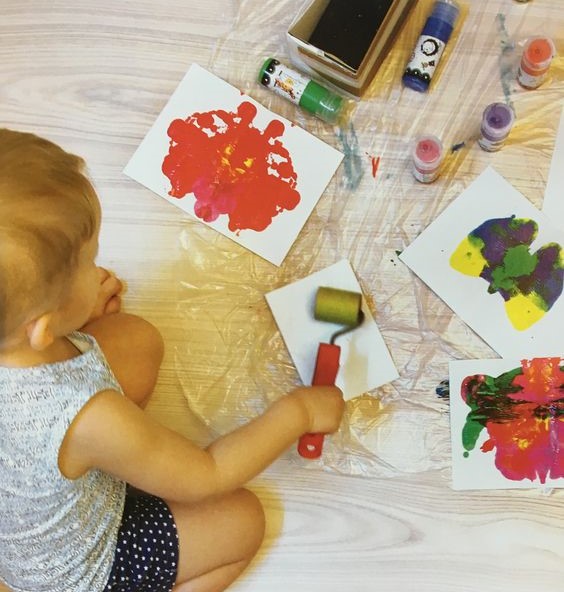
Unusual drawing. Try drawing with your child using paraffin candles, combs, cotton swabs, and toothbrushes. Such unusual activities help to get rid of childhood fears, as well as increase confidence in yourself and your abilities.
These types of creativity also allow you to develop imagination, visual perception and the ability to think abstractly.
Music. From early childhood, play music for your children, listen together and share your feelings. In the process, the child will learn not only to listen, but also to hear music, use his imagination and see whole stories. With kids you can listen not only to children’s songs, but also to classics. Gradually learn to move to music. Try different formats, such as musical stories or audio recordings. Studying and creating music not only develops your ear and musical taste, but also improves your memory, attention, and math skills.
Writing poetry, short stories, or creating your own stories develops language skills, expands vocabulary, and builds logical thinking skills.
Participation in theater productions develops children’s self-confidence, social skills, and the ability to understand and express emotions.
Working with a variety of materials through crafts such as sculpting, crafting and painting helps develop creative thinking, patience and perseverance.
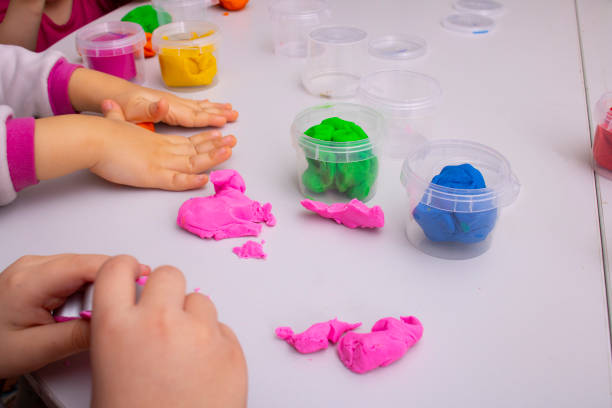
Modeling. This type of creativity helps children improve memory, imaginative thinking, fine motor skills, and also develop a sense of beauty. Modeling is associated with play, which is the leading activity for preschoolers. For modeling, you can use different materials that differ in texture. Clay and plasticine work well, and you can sculpt them from dough and paper pulp.
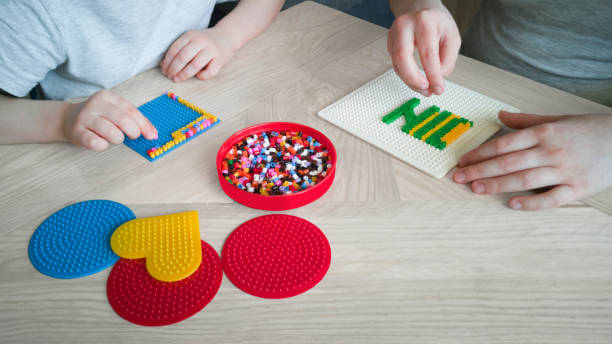
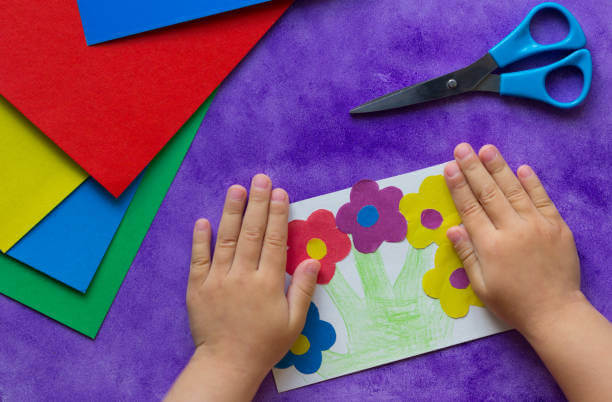
Application. This activity is unusual in its technique. If everything is clear and understandable in the drawing, then in the application the forms can be generalized and without details. Appliqué practice develops children’s sense of symmetry, rhythm and color, and also develops artistic taste.
Theatrical performances. Organize home performances where your child can transform into any character – become a giant, a superhero, a magic tree or a miracle doctor. Such activities develop intelligence, empathy, and help reveal new talents.
Various types of creativity influence the development of children not only culturally, but also psychologically and cognitively. These activities help children become creative, flexible in their thinking and open up new opportunities for self-expression.
Age and development of creative abilities
Each age period has certain characteristics in the development of creative abilities. Let’s figure it out.
How children express their creativity at different ages.
One or two years. At this age, children are interested in music and artistic creativity. Kids enjoy moving to the music and easily pick up the tempo. They learn to draw with pencils, try different techniques and experiment a lot.
Three to four years. Children experience a peak in creative activity. In the drawings you can already catch clear contours and even entire plots. Children can already take initiative, come up with something themselves and give free rein to their ideas and creativity.
Five to six years. Activities for children can already be supplemented with different types of creativity. Children already cope with tasks on their own, tolerate failures more calmly and painstakingly achieve results.
Seven to eight years. It’s time for serious creative activity – painting, theater, music. You should not limit your child – let him try different areas to understand what exactly attracts him most. It is possible that the leader will be one of the areas for which there are natural inclinations.
Creativity is an integral part of childhood development, which not only brings pleasure, but also shapes personality, enriches the inner world and promotes brain development. Encouraging children to participate in a variety of creative activities creates a supportive environment for their full development and potential.
10 tips for developing your child’s creativity.
Simple things help develop a child’s creative abilities. See for yourself:
1.Encourage children’s creativity. Allow you to play with different objects, explore different textures, materials, sizes, sounds.
2.Create a creative corner. Designate a place in the house where children can be creative. Place boxes with pencils, paints, beads, plasticine and other materials there. If there is little space in the apartment, select one shelf or drawer.
3.Embrace creative clutter. For a child, play is an important stage of development. You should not control children at every step, as the pleasure from the game will disappear, as well as the desire to experiment.
4.Give freedom in creativity. Do not reprimand your child if he draws or sculpts “wrong”. This is a creative process and there is no “wrong” here. Children get acquainted with materials and textures, try different techniques that they come up with themselves. This is creativity. Give your child the opportunity to express himself without making him doubt his abilities.
5.Get out into nature more often – this is an ideal place to release and develop creative energy. You can build a hut from branches, collect leaves, listen to birdsong, watch insects.
6.Discuss his creativity with your child. When a child brings a drawing, it is important to praise him, but not only that. Ask what he drew, what colors he used, what each of the characters in the picture is doing. Let your child tell a story – this way you will involve him in the creative process.
7.Read with your children. By your example, you will show that reading is fun and exciting, and will also help in the development of imagination, the ability to think and draw conclusions.
8.Give room for error. By making mistakes, a child develops. It won’t turn out perfect right away – explain this to your child if he is not satisfied with the result. Tell them that you also have mistakes, and there’s nothing wrong with that.
9.The main thing is the process, the result comes later. If you focus on the result, the child may lose interest in his favorite activity. You don’t have to be the best dancer or the best artist to be happy. Teach children to enjoy the process, praise them for every new skill and even small achievement.
10.Have a home exhibition. Collect your child’s drawings and crafts in one place. You can place them on a shelf, on a table or mount them on the wall. Discuss together which works are best sent to the exhibition and which ones should be removed for now. This is an easy way to give your child inspiration and show how much you appreciate them.
Let’s summarize. Every child is talented and capable of creativity. The task of parents is to help him develop by creating the necessary conditions for this. You can do a lot on your own, but you shouldn’t refuse the help of professionals in child development.


Hello, I’m Dorothy. I love writing and researching articles. Reading books about baby health, care and pregnancy are my favorite. I will be sharing delicious and healthy information on food and baby food during pregnancy.